Week 1
Shell, roles and bridge
The native shell with menus from the server, native sign-in, the secure bridge, push notifications and native menus for every role.
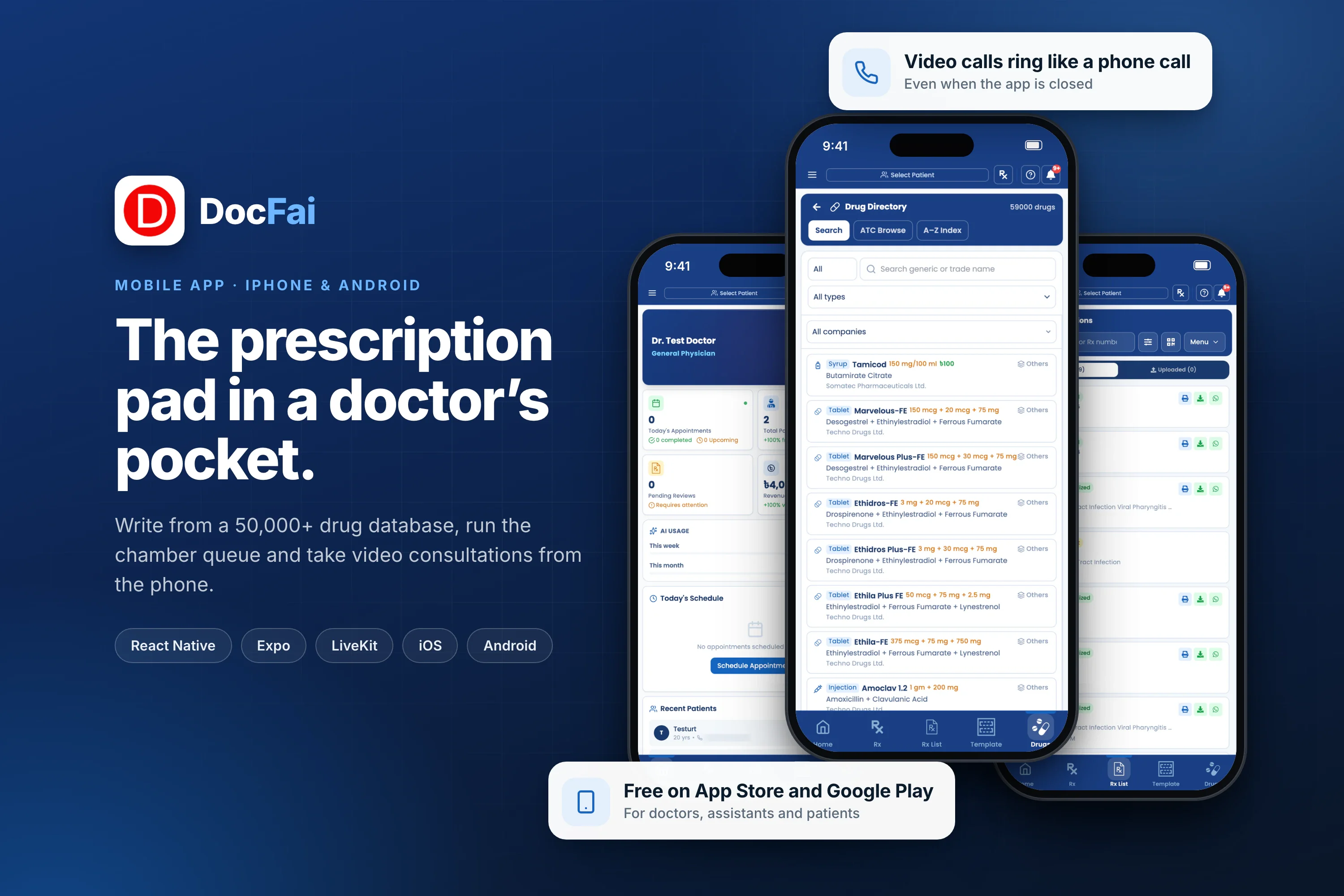
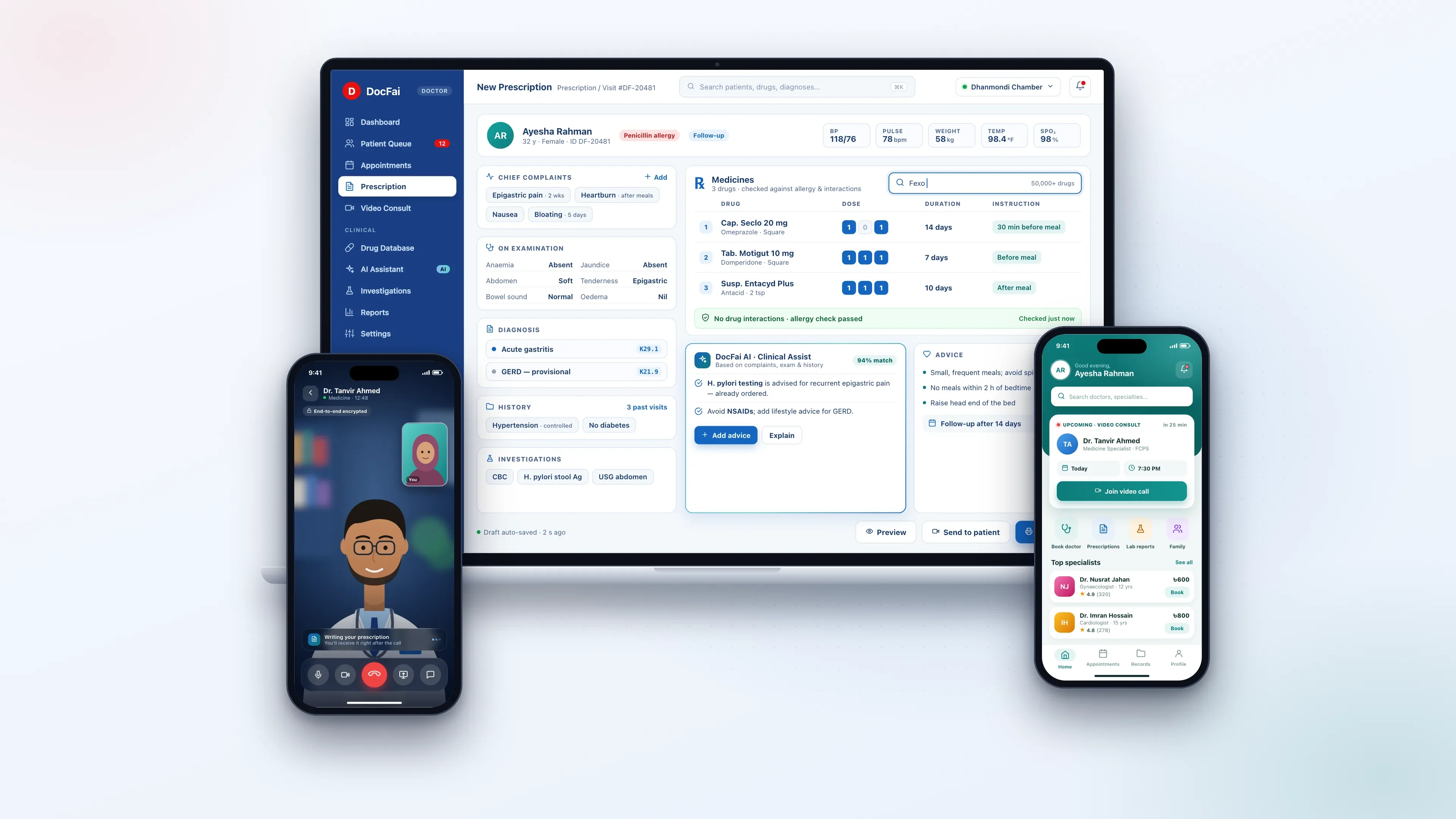
DocFai is a prescription app for doctors in Bangladesh, on iPhone and Android. Doctors write from a drug database of more than 50,000 drugs, run appointments and queues, and take video consultations. Patients book, join calls and keep their records in the same app.
DocFai already ran in the browser, but doctors move between chambers. A digital prescription app needs more than a website on a phone can give. A web page cannot ring when a patient calls, and it cannot share the screen during a consultation.
The web app looked for calls every four seconds while it was open. With the app closed, the doctor got a plain banner at best.
Neither the Android nor the iPhone web view can capture the screen, so the share button in a mobile call did nothing.
Doctors, assistants, nurses, labs, hospitals and patients need different tabs, and a store release for each menu change takes too long.
A clinical app sends notifications all day, and a patient's details must never show on a locked phone.
We put the DocFai web app inside a native React Native shell. Menus come from the server for each role, so they change without a store release. Calls, push, camera, biometric lock and screen sharing are native, and the clinical screens stay one code base with the web.
One locked-down web view and a checked bridge give the pages camera, files, print, GPS and speech. Lock-screen notifications carry no patient data.
Each role gets its own app bar, drawer and tabs from the backend, cached on the phone with a bundled fallback.
CallKit on iPhone and a full-screen call notification on Android, with Accept and Decline, a ringtone and a missed-call notice.
A separate LiveKit connection publishes the screen, through ReplayKit on iPhone and MediaProjection on Android, while the page keeps its call.
The first commit came on 29 July and the App Store release on 14 September. It went fast because the web app already did the clinical work, so we built only what a website cannot do.
The native shell with menus from the server, native sign-in, the secure bridge, push notifications and native menus for every role.
Release fixes, store screenshots from production, a system notification during calls and the first build for the stores.
Native screen sharing, calls that ring on a locked phone, a custom ringtone, missed-call notices and a simpler view for the drawer.
The DocCircle feed, Our Doctors and an AI evaluation button, then the App Store release on 14 September.
DocFai reached the App Store on 14 September 2026 and is also on Google Play. Video calls now ring like a phone call, even with the app closed. In October the drug catalogue got its own database on the phone, and new menus still reach users without an update.
Clear scope and requirements before development begins.
A practical approach built around your business needs.
Websites, web applications, and mobile apps under one team.
Clear communication throughout the project.
Practical insights on websites, web applications, mobile apps, and the technology behind better businesses. No noise, no daily emails—just useful things worth reading.
 Google Play